4K Live IPTV: Premium Ultra HD Streaming Guide
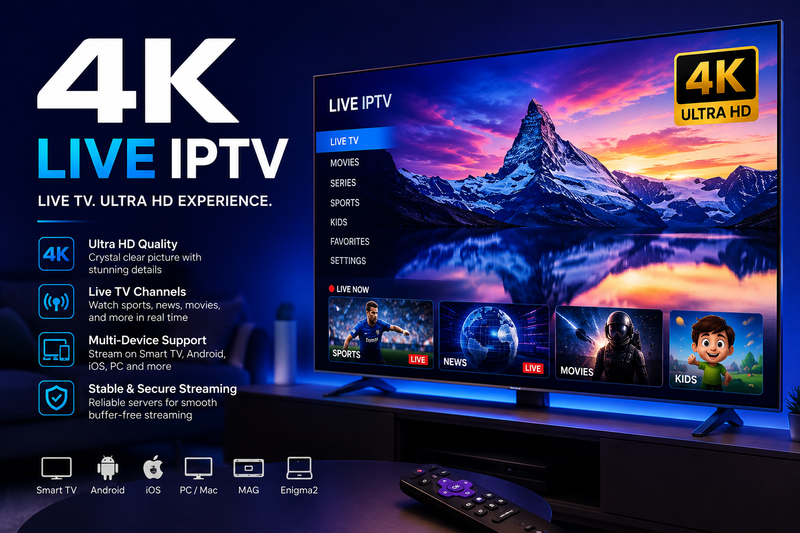
Discover 4K Live IPTV, its features, benefits, compatibility, and streaming tips for enjoying high-quality live TV with a smooth viewing experience.
✅GET NOW YOUR BEST IPTV SERVICE✅
Introduction
In the world of modern entertainment, viewers increasingly expect more than traditional television. They want flexible access to live channels, sharp picture quality, convenient devices, and a streaming experience that fits their lifestyle. 4K Live IPTV has become a popular search term for people interested in watching live television content through internet-based technology.
IPTV, or Internet Protocol Television, delivers television programming through an internet connection rather than relying exclusively on conventional cable, satellite, or terrestrial broadcasting. When combined with 4K resolution, IPTV can provide an impressive viewing experience with greater image detail and clarity on compatible screens.
This guide explains what 4K Live IPTV means, how IPTV technology works, the advantages of 4K streaming, compatible devices, factors that influence streaming quality, and important considerations when choosing an IPTV service.
What Is 4K Live IPTV?
4K Live IPTV refers to live television content delivered over an internet-based IPTV system in 4K or Ultra HD resolution when the channel and service support that quality.
The term can be broken down into three parts:
- 4K: A high-resolution video format commonly associated with approximately 3,840 × 2,160 pixels for consumer television.
- Live: Content is streamed in real time rather than being limited to previously recorded programs.
- IPTV: Television content is transmitted using Internet Protocol networks.
Compared with standard-definition video, 4K can display substantially more detail. On a suitably sized 4K television or monitor, this can make sports, documentaries, movies, and other visually detailed programming appear sharper and more immersive.
However, the availability of genuine 4K quality depends on the source content, streaming provider, device, internet connection, and other technical factors.
How Does 4K Live IPTV Work?
Traditional television broadcasting and IPTV use different delivery methods. IPTV sends video data through an IP network, allowing compatible applications and devices to receive and decode the stream.
A typical IPTV setup may include:
- Content source: A broadcaster or licensed content provider supplies television programming.
- Encoding: Video is compressed into a format suitable for internet delivery.
- IP distribution: The encoded stream is delivered through an internet-based network.
- IPTV platform: The service organizes channels and other available content.
- Compatible application or device: The viewer accesses the stream through a smart TV, streaming device, computer, tablet, or supported mobile device.
- Display: The device decodes the stream and displays the content on the screen.
For 4K streaming, the entire chain needs to support the required resolution and bandwidth. Simply having a 4K television does not automatically turn every stream into 4K.
💎 Premium IPTV Service – Fast & Reliable 📺
Why Is 4K Resolution Important?
Picture quality is one of the biggest attractions of 4K Live IPTV.
A 4K image contains significantly more pixels than Full HD. This additional resolution can provide finer details, especially on larger displays.
For example, 4K can be particularly useful when watching:
- Live sports
- Nature and travel programming
- Concerts
- Movies
- News broadcasts
- Documentary content
- Other visually detailed programming
A larger television can make differences in resolution easier to notice, particularly when viewers sit at an appropriate distance from the screen.
It is also important to remember that resolution is only one part of video quality. Bitrate, compression, frame rate, color depth, source quality, and network performance can all affect the final viewing experience.
Key Benefits of 4K Live IPTV
1. High-Resolution Picture Quality
The primary advantage is the potential for sharper images. When a channel is genuinely delivered in 4K, viewers can benefit from improved detail and clarity compared with lower-resolution streams.
2. Internet-Based Convenience
IPTV allows television content to be distributed through internet-connected devices. This can provide more flexibility than conventional television setups, depending on the service.
3. Multi-Device Compatibility
Many IPTV platforms can be accessed through supported smart TVs, streaming boxes, computers, smartphones, and tablets. Compatibility varies between providers and applications.
4. Flexible Viewing
Internet-based television can make it easier for viewers to watch content in different locations, provided the service permits the relevant usage and the internet connection is suitable.
5. Better Experience on Large Screens
4K resolution is especially attractive for modern large-screen televisions. More pixels can help preserve detail when content is displayed across a larger viewing area.
6. Modern Streaming Features
Depending on the legitimate IPTV platform, viewers may have access to features such as electronic program guides, catch-up television, recording, video-on-demand, parental controls, or multi-device support.
4K Live IPTV vs. Traditional Television
The main difference between IPTV and traditional television is the way content reaches the viewer.
Traditional television may use cable, satellite, or terrestrial transmission. IPTV uses internet-based networks to deliver video.
Neither technology is automatically better for every viewer. The right option depends on factors such as available infrastructure, internet reliability, content requirements, equipment, cost, and personal preferences.
IPTV can be particularly attractive to people who already have a reliable broadband connection and prefer internet-based entertainment services.
What Internet Speed Is Needed for 4K IPTV?
Internet performance is an important consideration when streaming high-resolution video.
4K video generally requires considerably more bandwidth than standard-definition or Full HD video. The exact requirement varies because different services use different codecs, bitrates, compression techniques, and streaming protocols.
A good IPTV setup should therefore consider:
- Download speed
- Network stability
- Latency
- Wi-Fi quality
- Router performance
- Network congestion
- Number of devices using the connection simultaneously
A fast connection can still experience buffering if Wi-Fi coverage is weak or the streaming server is overloaded.
For the most consistent experience, a wired Ethernet connection can sometimes be preferable to Wi-Fi, particularly for a television or streaming device that remains in one location.
Choosing a Device for 4K Live IPTV
The best device depends on your viewing habits and the IPTV platform you intend to use.
Smart TVs
Modern smart televisions can offer convenient access to supported streaming applications. Before choosing an IPTV service, verify that its official application is compatible with your television's operating system.
Streaming Devices
Dedicated streaming devices can provide an alternative when a television has limited application support. Always confirm that the device supports the required 4K resolution and the relevant application.
Computers and Laptops
A computer can provide flexible access to browser-based or supported IPTV platforms. Display resolution and hardware capabilities can affect the experience.
Smartphones and Tablets
Mobile devices can be useful for watching live content away from the main television, although the smaller display may make the advantages of 4K less noticeable.
Factors That Affect 4K Streaming Quality
Even with a fast internet connection and a modern television, several factors can affect performance.
Source Quality
A genuine 4K source is necessary to display native 4K content. Upscaling lower-resolution video does not provide the same level of detail as native 4K footage.
Bitrate
Bitrate determines how much video data is transmitted over time. A higher-quality source may require more bandwidth, while aggressive compression can reduce visual quality.
Network Stability
Consistent connectivity is often more important than simply having a high maximum download speed. Interruptions and congestion can result in buffering or quality changes.
Server Performance
The infrastructure delivering the stream can affect playback. Legitimate providers generally need sufficient capacity to handle demand.
Device Hardware
Older hardware may struggle with demanding video formats even when the display itself supports 4K.
Application Compatibility
An IPTV service may work differently across operating systems and devices. Checking official compatibility information before subscribing can prevent unnecessary problems.
🔍 Explore More Streaming Guides
How to Improve Your 4K IPTV Viewing Experience
You can take several practical steps to improve streaming performance:
Use a reliable internet connection: Make sure your broadband service is suitable for high-resolution streaming.
Prefer Ethernet when practical: A wired connection can reduce wireless interference and improve consistency.
Keep your streaming device updated: Install official software and firmware updates when available.
Reduce unnecessary network traffic: Large downloads and multiple high-bandwidth streams can compete for available bandwidth.
Check your display settings: Confirm that your television or monitor is configured appropriately for 4K playback.
Use official applications: Download applications from trusted sources and follow the service's recommended installation instructions.
Check service requirements: Confirm that your subscription, device, and network meet the provider's technical requirements.
Is Every IPTV Service a 4K Service?
No. The term IPTV describes the delivery technology; it does not guarantee a particular video resolution.
An IPTV service can provide standard-definition, HD, Full HD, 4K, or a combination of formats. Some services may advertise a large number of channels while only a portion are actually available in 4K.
When evaluating a service, look for clear information about:
- Actual 4K channel availability
- Supported devices
- Streaming quality
- Official applications
- Subscription terms
- Customer support
- Regional availability
- Content licensing
This helps distinguish genuine technical capabilities from marketing claims.
Legal and Safety Considerations
One of the most important considerations when searching for 4K Live IPTV is the legitimacy of the service.
IPTV technology itself is a legitimate method of delivering television over internet networks. However, individual services may have different rights and licenses for the content they distribute.
Before subscribing, consumers should consider whether a provider has appropriate authorization to offer its channels and content in their region.
It is also wise to avoid unofficial applications, suspicious websites, and services that request unnecessary personal information. Use reputable providers, official applications, secure payment methods, and strong account credentials.
4K Live IPTV for Sports
Live sports can be an excellent use case for high-resolution streaming. Fast-moving action, stadium environments, player movement, and detailed camera shots can benefit from a high-quality source.
However, sports streaming quality depends on more than resolution. Frame rate, bitrate, encoding quality, and network stability are also important.
For viewers who prioritize live sports, it is worth checking whether the service officially supports the specific competitions and channels they want to watch.
4K Live IPTV and Smart Home Entertainment
Modern entertainment systems increasingly combine television, streaming services, smart speakers, gaming consoles, and other connected devices.
A 4K IPTV service can become part of this broader entertainment setup when it supports the viewer's preferred hardware.
For example, a household may use a 4K smart TV as its primary screen while accessing different legitimate streaming platforms through their respective official applications.
The key is to choose services that work reliably with the devices already in the home.
🚀 Find Your Perfect IPTV Plan →
Common Questions About 4K Live IPTV
Does IPTV automatically mean 4K?
No. IPTV refers to how television content is delivered. The actual resolution depends on the content and service.
Can I watch 4K IPTV on a Full HD TV?
A Full HD television cannot display native 4K resolution. Compatible devices may downscale higher-resolution content to the display's supported resolution.
Is faster internet always better for IPTV?
A faster connection can help, but stability is also important. Network congestion, Wi-Fi interference, and server performance can still affect playback.
Can I use 4K IPTV on a phone?
It depends on the service and application. A device must support the relevant video format, and the practical benefit of 4K may be limited on a small screen.
Does every 4K channel look the same?
No. Resolution is only one part of image quality. Bitrate, compression, source quality, frame rate, and production quality also matter.
How do I choose a reliable IPTV provider?
Look for a legitimate provider with transparent service information, appropriate content rights, clear device compatibility, reliable support, and straightforward subscription terms.
Conclusion
4K Live IPTV represents the combination of internet-based television delivery and high-resolution Ultra HD viewing. For users with compatible devices and a reliable broadband connection, it can provide a flexible way to access supported live television content with impressive image detail.
However, choosing the right service requires more than looking for the word "4K." Viewers should evaluate actual 4K availability, streaming quality, device compatibility, network requirements, customer support, security, and—most importantly—the legitimacy of the content being offered.
As internet infrastructure and home entertainment technology continue to evolve, IPTV is likely to remain an important part of the modern television ecosystem. By selecting reputable services and using compatible equipment, viewers can make the most of high-quality internet-based television while enjoying a smoother and more reliable viewing experience.