IPTV Trends: Top Future Trends in Internet TV
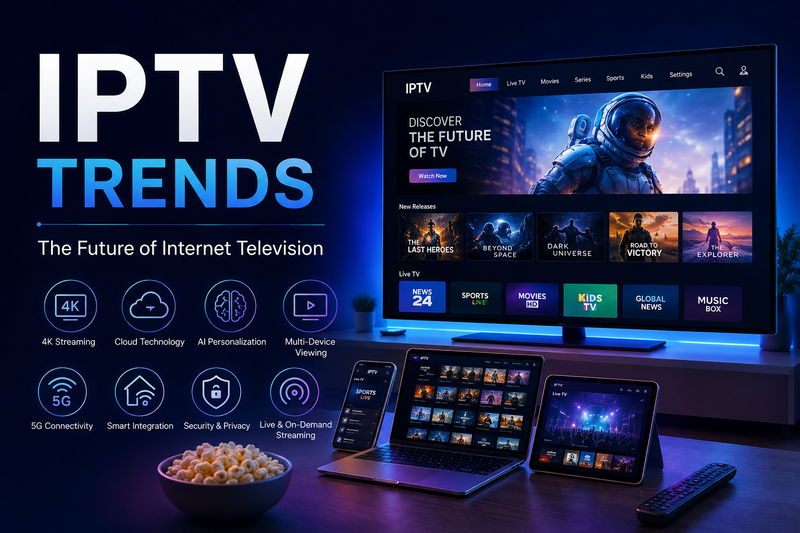
Discover the latest IPTV trends shaping internet television, including AI, 4K streaming, personalization, cloud technology, and future viewing.
✅GET NOW YOUR BEST IPTV SERVICE✅
Introduction
The way people watch television is changing rapidly. Traditional cable and satellite services are increasingly competing with internet-based television platforms that offer greater flexibility, personalization, and convenience. One of the most important developments in this transformation is IPTV, or Internet Protocol Television.
IPTV delivers television content through an internet connection instead of conventional broadcast, cable, or satellite networks. As internet infrastructure improves and consumers become more comfortable with streaming services, the IPTV industry continues to evolve.
Understanding the latest IPTV trends is important for viewers, content providers, technology companies, and businesses looking to understand the future of digital entertainment. From artificial intelligence and personalized recommendations to 4K streaming, cloud-based services, and smarter connected devices, several technologies are reshaping the IPTV experience.
In this article, we explore the major IPTV trends influencing the industry and explain what they could mean for the future of internet television.
What Is IPTV?
IPTV stands for Internet Protocol Television. Unlike traditional television broadcasting, IPTV uses internet protocols to deliver television programs, live channels, video-on-demand content, and other digital media to compatible devices.
Depending on the service, viewers may access IPTV content through smart TVs, streaming devices, computers, smartphones, tablets, or dedicated applications.
The technology can support several types of viewing experiences, including:
- Live television streaming
- Video-on-demand content
- Catch-up television
- Time-shifted programming
- Interactive television
- Multi-device viewing
The growing availability of high-speed broadband and fiber internet has helped create favorable conditions for IPTV adoption.
Why IPTV Trends Matter
The television industry is no longer defined solely by scheduled programming. Viewers increasingly expect entertainment to be available whenever and wherever they want it.
Modern audiences often look for:
- Flexible viewing options
- High-quality video
- Personalized recommendations
- Multiple device compatibility
- On-demand entertainment
- Reliable streaming
- Interactive features
These expectations are encouraging IPTV providers to invest in new technologies and improve the overall user experience.
💎 Premium IPTV Service – Fast & Reliable 📺
For businesses, keeping up with IPTV trends can also reveal opportunities in content delivery, advertising, software development, cloud infrastructure, and digital entertainment.
1. AI-Powered Personalization
One of the biggest IPTV trends is the increasing use of artificial intelligence (AI) and machine learning.
Modern platforms can analyze viewing behavior, preferences, search activity, and content interactions to provide more relevant recommendations. Instead of requiring users to browse through large content libraries, intelligent systems can highlight programs that are more likely to match individual interests.
AI can potentially help IPTV platforms improve:
- Content recommendations
- Search functionality
- Audience engagement
- Advertising relevance
- Customer support
- Content discovery
As AI technology develops, IPTV services are likely to become increasingly personalized.
2. Growth of 4K and High-Quality Streaming
Video quality remains a major factor in the streaming experience. The demand for high-resolution content has made 4K streaming an important IPTV trend.
4K provides significantly more detail than traditional Full HD content, making it particularly attractive for sports, movies, documentaries, and other visually demanding programming.
However, delivering high-quality video requires suitable infrastructure. Faster broadband connections, efficient video compression, and improved content delivery networks are helping IPTV platforms provide better picture quality while managing bandwidth requirements.
The future may bring even greater adoption of advanced formats, including higher resolutions and improved dynamic range where infrastructure and compatible devices support them.
3. Cloud-Based IPTV Infrastructure
Cloud computing is becoming increasingly important across the digital entertainment industry.
Cloud-based IPTV infrastructure can help providers manage content, scale services, process data, and deliver programming across different locations. Instead of relying exclusively on traditional physical infrastructure, providers can use cloud technologies to create more flexible systems.
Potential benefits include:
- Greater scalability
- Flexible infrastructure management
- Faster deployment
- Improved resource utilization
- Support for large audiences
As demand for internet television continues to grow, cloud technology is expected to remain an important part of IPTV development.
4. Multi-Device Viewing
Today's viewers are not limited to watching television on a television set.
Consumers increasingly use smartphones, tablets, laptops, smart TVs, and streaming devices for entertainment. As a result, multi-device compatibility has become a key IPTV trend.
A modern IPTV experience may allow users to move between devices while maintaining access to their content and preferences.
This flexibility is particularly useful for households where different people use different screens. It also supports changing viewing habits, such as watching live television on a smart TV at home and accessing on-demand content on a mobile device.
5. Smart TV Integration
Smart TVs have become an important part of the connected entertainment ecosystem.
Many modern televisions include built-in internet connectivity and support for streaming applications. This makes it easier for users to access internet-based television without requiring traditional set-top boxes.
IPTV providers are therefore placing greater emphasis on optimized applications and interfaces for smart television platforms.
A simple interface, fast navigation, responsive search, and reliable playback can significantly influence the overall user experience.
6. Interactive Television Experiences
Traditional television is primarily a one-way communication system. IPTV has the potential to make television more interactive.
Interactive features can include:
- Electronic program guides
- On-demand content
- Personalized menus
- Interactive advertising
- Content recommendations
- Search and discovery tools
- Additional information related to programs
As viewers become accustomed to interactive digital platforms, expectations for television are changing as well.
🔍 Explore More Streaming Guides
Future IPTV services may increasingly combine traditional television programming with features commonly associated with web and mobile applications.
7. Better Streaming Efficiency
Delivering high-quality video to large audiences requires efficient technology.
Streaming providers continue to improve compression methods, content delivery networks, adaptive bitrate streaming, and network optimization. These technologies can help reduce buffering and provide more consistent playback when network conditions change.
Adaptive streaming is particularly important because internet speeds can vary between users and locations. Rather than delivering the same video quality continuously, systems can adjust the stream according to available bandwidth and device capabilities.
This can contribute to a smoother viewing experience.
8. IPTV and Live Sports Streaming
Live sports are an important driver of demand for internet television.
Sports viewers often want live access, high video quality, multiple viewing options, and minimal delays. IPTV platforms can provide flexible ways to access live sporting content where the relevant rights and services are available.
Advanced platforms may also offer features such as alternative camera angles, statistics, interactive information, or personalized content.
The combination of live sports and internet delivery is likely to remain an important area of IPTV innovation.
9. Personalized Advertising
Advertising is also changing as television becomes more digital.
Traditional television advertising generally delivers the same commercial to a broad audience. Internet-based television can potentially support more targeted advertising based on audience segments and viewing patterns, subject to applicable privacy requirements and regulations.
This approach can help advertisers make campaigns more relevant while providing IPTV platforms with additional monetization opportunities.
As data-driven advertising technology develops, personalized advertising may become a larger component of the IPTV ecosystem.
10. Integration With Connected Home Technology
The smart home is becoming increasingly connected. Televisions can now interact with voice assistants, smart speakers, mobile applications, home networks, and other connected devices.
This creates opportunities for IPTV platforms to become part of a broader digital entertainment environment.
For example, users may increasingly expect to control content through voice commands, connect multiple devices, or integrate television services with other smart-home functions.
The convergence of IPTV and connected-home technology could create more seamless entertainment experiences.
11. Improved User Experience and Interface Design
Technology alone does not guarantee a successful IPTV service. The user interface plays an equally important role.
Viewers generally want to find content quickly without navigating complicated menus. IPTV providers are therefore focusing on cleaner designs, improved search, personalized home screens, and easier content discovery.
Important UX considerations include:
- Fast loading times
- Simple navigation
- Clear categories
- Effective search
- Personalized recommendations
- Accessible controls
- Consistent performance across devices
A well-designed platform can make a significant difference in user satisfaction.
🚀 Find Your Perfect IPTV Plan →
12. Security and Privacy
As IPTV services become more connected, security is increasingly important.
Providers need to protect user accounts, payment information, content rights, and network infrastructure. Strong authentication, secure connections, access controls, and responsible data management are important components of a modern IPTV platform.
Privacy is another major consideration. Services that collect viewing data should handle that information responsibly and comply with applicable privacy laws.
Consumers should also evaluate IPTV services based on their transparency, security practices, licensing, and reputation.
13. The Importance of Legal and Licensed IPTV Services
Not every service marketed as IPTV operates in the same way. IPTV is simply a method of delivering television content over internet networks; the legality of a service depends heavily on whether it has the appropriate rights and licenses for the content it provides.
Consumers should choose legitimate providers that have authorization to distribute the channels, programs, movies, or sports content they offer.
Using properly licensed services supports content creators and rights holders while reducing the risks associated with unauthorized platforms.
14. Faster Internet and 5G Connectivity
Internet infrastructure will continue to influence IPTV adoption.
Fiber broadband provides high-speed and relatively reliable connectivity for households, while 5G networks can improve mobile internet performance in supported locations.
Faster connections make it easier to stream high-resolution video and access internet television across different devices.
As broadband availability expands globally, IPTV services may become accessible to an even wider audience.
15. The Future of IPTV
The future of IPTV is likely to be defined by a combination of connectivity, artificial intelligence, cloud infrastructure, personalization, and improved user experiences.
Instead of simply replacing traditional television delivery, IPTV is becoming part of a broader digital entertainment ecosystem.
Future services may offer more intelligent content discovery, seamless device switching, advanced personalization, improved video quality, interactive experiences, and more flexible ways to consume live and on-demand programming.
At the same time, providers will need to address important challenges such as content licensing, cybersecurity, privacy, network reliability, and competition within the streaming market.
How IPTV Is Changing the Television Industry
The growth of IPTV reflects a broader change in consumer behavior. Viewers increasingly expect entertainment to fit around their schedules rather than requiring them to follow fixed broadcast timetables.
This shift has encouraged television companies to rethink how content is distributed and monetized.
The industry is moving toward a model where live television, on-demand programming, personalized recommendations, digital advertising, and interactive features can exist within the same ecosystem.
For consumers, this can mean more choice and flexibility. For providers, it creates both new opportunities and greater competition.
Conclusion
The latest IPTV trends demonstrate how quickly internet television is evolving. AI-powered personalization, 4K streaming, cloud infrastructure, multi-device access, smart TV integration, interactive features, improved streaming efficiency, and stronger security are all contributing to the development of modern IPTV.
As broadband networks become faster and connected devices become more common, internet-based television is likely to remain an important part of the entertainment industry.
For consumers, the most important consideration is to choose reliable and properly licensed services that prioritize quality, security, privacy, and a good viewing experience. For businesses, understanding these trends can help identify new opportunities in digital television and streaming technology.
Ultimately, the future of IPTV will be shaped by how effectively technology providers combine high-quality content, intelligent personalization, reliable delivery, and user-friendly experiences. The television experience is becoming more connected and flexible, and IPTV is positioned to play an important role in that transformation.