Top IPTV Services: Best Legal Options & Buying Guide
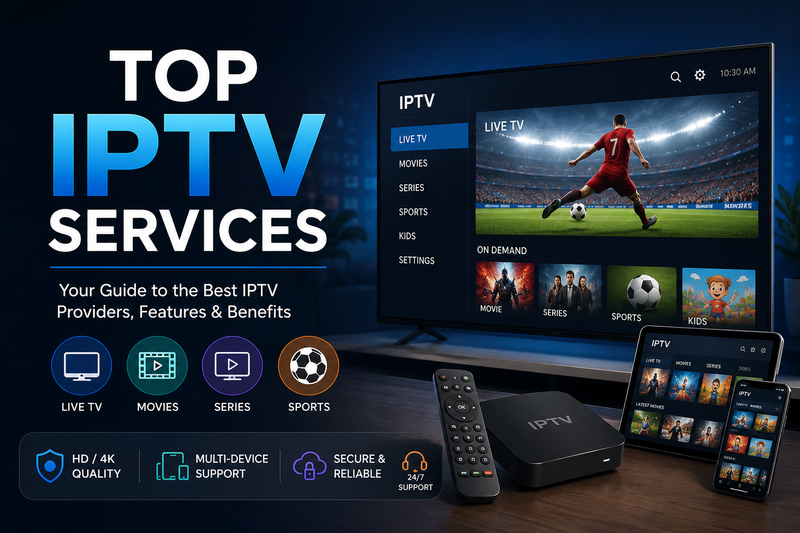
Discover the top IPTV services, key features, pricing factors, device compatibility, and tips for choosing a reliable and legal IPTV provider.
✅GET NOW YOUR BEST IPTV SERVICE✅
Top IPTV Services: What You Need to Know Before Choosing One
Streaming television has changed dramatically in recent years. Instead of relying only on traditional cable or satellite packages, viewers can now watch live television, movies, sports, news, and on-demand content through internet-based services. This shift has made IPTV services increasingly popular among cord-cutters and streaming enthusiasts.
If you are searching for the top IPTV services, it is important to look beyond a large channel count or an attractive price. A quality IPTV service should provide a reliable viewing experience, support the devices you use, offer transparent pricing, and operate legally in your region.
This guide explains what IPTV is, how IPTV services work, which features matter most, and how to compare providers before subscribing.
What Is IPTV?
IPTV stands for Internet Protocol Television. Unlike traditional television services that deliver programming through cable, satellite, or terrestrial signals, IPTV delivers television content through an internet connection.
Depending on the provider, IPTV may include live TV channels, video-on-demand content, catch-up programming, cloud DVR features, and other streaming options.
However, IPTV is a technology rather than a specific type of subscription. Both legitimate television companies and unauthorized providers can use internet-based delivery. Therefore, consumers should always verify that a service has the appropriate rights to distribute the content it offers.
Why Are IPTV Services So Popular?
The growing popularity of IPTV is largely connected to convenience and flexibility. Modern viewers increasingly want to watch content on their own schedule and across multiple devices.
Some of the major benefits include:
- Flexible viewing: Watch television through an internet connection instead of depending exclusively on traditional TV infrastructure.
- Multi-device support: Many legitimate services work on smart TVs, smartphones, tablets, computers, and supported streaming devices.
- On-demand entertainment: Depending on the provider, subscribers may have access to movies, series, replays, and other on-demand programming.
- Personalized packages: Some services provide different plans based on viewing preferences.
- Easy access: Internet-based television can be convenient for households that already use streaming platforms.
- Modern features: Features such as pause, replay, catch-up TV, profiles, and cloud recording may be available with certain services.
These advantages make IPTV an appealing alternative for people who want more control over their television experience.
What Makes the Top IPTV Services Different?
When comparing the top IPTV services, it is easy to focus on the number of channels advertised. However, channel quantity alone does not determine whether a service is worthwhile.
A better approach is to evaluate several factors.
1. Legal Content Licensing
Legal access should be your first priority. A reputable provider should have the necessary rights or licensing arrangements to distribute the television channels and content it offers.
Be cautious of services advertising thousands of premium channels and pay-per-view events at unusually low prices without explaining how the content is licensed.
A legitimate service should provide clear information about its company, subscription terms, supported markets, and content offering.
2. Streaming Reliability
Nobody wants a television service that constantly buffers or disconnects.
Before choosing an IPTV provider, investigate its reputation for reliability. Look for information about stream stability, server performance, service interruptions, and customer experiences.
Your internet connection also plays an important role. Even a reputable provider cannot guarantee smooth playback if your home network is unstable or too slow for the selected video quality.
3. Picture Quality
Video quality is another important consideration. Depending on the service and content, viewers may find options such as HD, Full HD, or 4K.
However, advertised resolution should not be the only consideration. A stable HD stream can provide a better experience than an unstable 4K stream.
Check whether the provider clearly explains which channels and programs support higher resolutions and whether additional equipment or subscription requirements apply.
4. Device Compatibility
The best IPTV service for one household may not be the best for another because device compatibility varies.
Before subscribing, check whether the service officially supports your preferred devices, such as:
- Smart TVs
- Android TV devices
- Apple devices
- Smartphones
- Tablets
- Windows or Mac computers
- Supported streaming players
Always use the provider's official application or officially supported setup method whenever available.
5. User Interface and Electronic Program Guide
A good interface makes finding content easier.
An Electronic Program Guide (EPG) can display current and upcoming programming, allowing viewers to browse channels without guessing what is currently playing.
Look for a service with an intuitive interface, useful categories, responsive navigation, search functionality, and clear program information.
6. Customer Support
Customer support is often overlooked when comparing IPTV subscriptions.
If your application stops working or you encounter account problems, you want a provider that offers a clear way to obtain assistance.
Check whether customer support is available through official channels and whether the company provides setup guides, troubleshooting documentation, FAQs, or direct assistance.
💎 Premium IPTV Service – Fast & Reliable 📺
How to Compare Top IPTV Services
Instead of choosing the first provider that appears in search results, create a simple comparison based on your requirements.
Consider the following factors:
FeatureWhat to Check| Legality | Does the provider have appropriate content rights? |
| Reliability | Are streams generally stable? |
| Video Quality | Are HD or 4K options available where applicable? |
| Compatibility | Does it support your devices? |
| EPG | Is program information available? |
| On-Demand Content | Are movies and shows included? |
| Customer Support | Is official assistance available? |
| Pricing | Is the subscription transparent and reasonable? |
| Cancellation | Can you cancel according to clear terms? |
| Privacy | Does the provider explain how customer data is handled? |
This approach makes it easier to identify a service that fits your actual viewing habits.
IPTV Services vs Traditional Cable TV
One of the biggest reasons consumers investigate IPTV is the desire to move away from traditional television packages.
Cable television can offer extensive channel lineups, but it may require dedicated equipment, installation, long-term contracts, or bundled services.
IPTV and other legitimate streaming services can provide greater flexibility because television programming is delivered through an internet connection.
However, internet-based television is not automatically cheaper or better. The right option depends on your household, internet service, preferred channels, equipment, and budget.
Before switching, compare the total monthly cost rather than looking only at the advertised subscription price.
IPTV vs Streaming Services
IPTV is also different from on-demand streaming platforms.
Traditional streaming platforms generally focus heavily on movies and television series that viewers select whenever they want. IPTV services may focus more on live television channels and scheduled programming.
Some legitimate providers combine live TV with on-demand content, creating a hybrid experience.
For many households, the best setup may involve using several legal services rather than expecting one subscription to provide every type of entertainment.
What Internet Speed Do You Need for IPTV?
Your internet connection has a direct impact on streaming quality.
The exact bandwidth requirement varies according to resolution, compression, network congestion, device performance, and the provider's streaming technology.
As a general rule, higher-quality video requires more bandwidth. Households should also account for other activities using the same internet connection, including video calls, gaming, downloads, and additional streaming devices.
For the most reliable experience, use a stable broadband connection and, when possible, connect compatible devices through Ethernet or a strong Wi-Fi network.
How to Avoid Unreliable IPTV Providers
The IPTV market includes services with very different levels of quality and legitimacy. Consumers should therefore watch for warning signs.
Be particularly cautious when a provider:
- Promises an enormous number of premium channels for an unusually low price.
- Does not clearly identify the company behind the service.
- Provides no information about content licensing.
- Requests payment through unusual or difficult-to-reverse methods.
- Encourages customers to use unofficial applications or suspicious downloads.
- Has no clear refund, cancellation, or subscription policy.
- Makes unrealistic promises about permanent access.
- Has limited or nonexistent customer support.
A professional-looking website does not automatically mean a service is legitimate. Research the company independently and read its terms before paying.
Are Free IPTV Services Safe?
Some websites advertise free IPTV channels. While free entertainment can sound appealing, users should be careful.
Free services may have limited content, intrusive advertising, unreliable streams, privacy concerns, or questionable distribution rights. Some may also encourage users to download applications from unknown sources.
If a service provides premium programming for free without a clear explanation of its licensing arrangement, that should be treated as a warning sign.
For safer viewing, use established providers and official applications.
How to Choose the Best IPTV Service for Your Needs
The "best" IPTV service is subjective. A sports fan, international viewer, movie enthusiast, and casual television viewer may have completely different requirements.
Start by identifying your priorities.
For Live TV Viewers
Look for a service that offers the legitimate channels you actually watch, a reliable live-streaming experience, and an accurate program guide.
For Sports Fans
Check whether the provider has the appropriate rights for the competitions and events you want to watch in your country. Sports rights frequently vary by location and season.
For Movie and TV Fans
Prioritize services with a strong legal on-demand catalog, high-quality playback, useful search features, and an interface that makes content discovery simple.
For Families
Look for multi-device support, parental controls where available, multiple profiles, and clear account-management features.
For International Viewers
Check regional availability carefully. Channel rights differ significantly between countries, so an IPTV service available in one market may not offer the same programming elsewhere.
Questions to Ask Before Buying an IPTV Subscription
Before paying for an IPTV subscription, ask:
Is the service legal in my country?
Confirm that the provider is authorized to distribute its advertised programming in your region.
Does it support my device?
Check official compatibility information before purchasing.
What channels are actually included?
Do not rely only on a large headline number. Review the specific channel lineup.
Are there additional fees?
Look for activation fees, equipment costs, taxes, or other charges.
What happens if I want to cancel?
Read the cancellation and refund policy carefully.
Does the provider offer customer support?
A legitimate business should make it reasonably clear how customers can receive assistance.
Is the service available in my location?
Content availability and licensing can vary by country.
🔍 Explore More Streaming Guides
The Future of IPTV
The television industry is continuing to move toward internet-based delivery. Faster broadband, connected televisions, improved streaming technology, and changing consumer habits are all contributing to this transformation.
At the same time, consumers are becoming more aware of digital rights, privacy, security, and subscription transparency.
The future of IPTV will likely involve more personalized viewing experiences, better integration between live and on-demand programming, improved streaming quality, and greater use of connected devices.
For consumers, this means more choice—but also more responsibility when selecting providers.
Final Thoughts on the Top IPTV Services
Searching for the top IPTV services should not simply be a race to find the provider with the biggest channel list or lowest price. Reliability, legality, content quality, device compatibility, customer support, privacy, and transparent pricing are much more important when choosing a long-term television service.
Start by identifying the channels and features you actually need. Then compare reputable providers based on licensing, supported devices, streaming performance, pricing, and customer service.
Most importantly, choose services that legitimately provide access to their advertised programming. Avoid offers that seem too good to be true, particularly when premium content is offered at an unusually low price with little information about its source.
With careful research, you can find an IPTV or internet-based television service that provides a convenient, dependable, and enjoyable viewing experience while respecting content rights and consumer safety.
Frequently Asked Questions
What are the top IPTV services?
The top IPTV services are those that combine legitimate content access, reliable streaming, suitable channel selections, device compatibility, transparent pricing, and dependable customer support. The ideal choice depends on your country and viewing preferences.
Is IPTV legal?
IPTV technology itself is legal. The important issue is whether a provider has the necessary rights to distribute the content it offers. Consumers should choose legitimate providers and avoid services that distribute copyrighted programming without authorization.
Can I watch IPTV on a Smart TV?
Many legitimate IPTV and live-TV services support Smart TVs, although compatibility depends on the specific provider and television operating system. Always check official device requirements before subscribing.
🚀 Find Your Perfect IPTV Plan →
Is IPTV better than cable?
It depends on your needs. IPTV can offer flexibility and internet-based access, while cable may provide different channel packages and service arrangements. Compare pricing, channels, equipment, reliability, and contract terms before switching.
What should I look for in an IPTV provider?
Focus on legal content licensing, reliable streaming, video quality, device compatibility, an easy-to-use interface, customer support, transparent pricing, cancellation terms, and privacy practices.
Can IPTV replace streaming services?
It can in some households, particularly when a legitimate provider combines live television with on-demand programming. However, many viewers choose to use IPTV alongside other legal streaming platforms to access different types of content.