Strong 8K IPTV: Features, Benefits & Streaming Guide
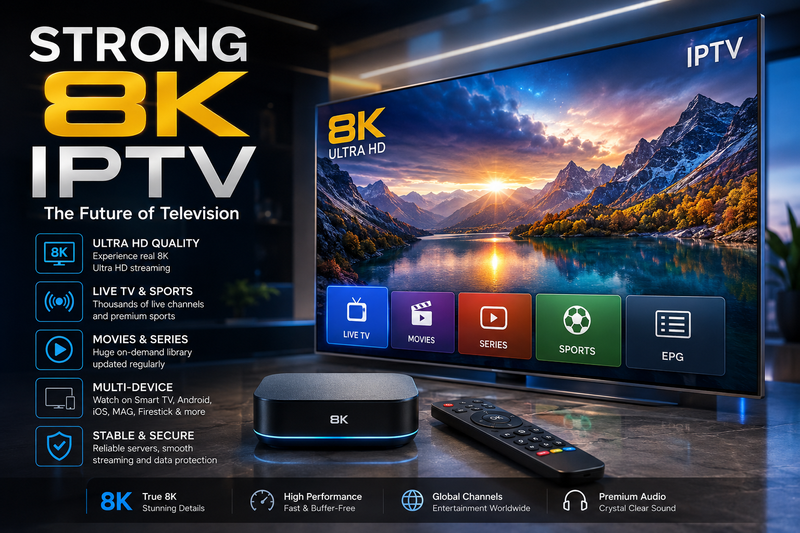
Discover Strong 8K IPTV, its features, benefits, setup tips, picture quality, compatibility, and what to consider before choosing an IPTV service.
✅GET NOW YOUR BEST IPTV SERVICE✅
Strong 8K IPTV: Experience the Future of Television Streaming
Television viewing has changed dramatically in recent years. Instead of relying only on traditional cable or satellite television, viewers can now access content through internet-based streaming technologies. One term that has attracted attention among people interested in high-resolution entertainment is Strong 8K IPTV.
IPTV, or Internet Protocol Television, delivers television programming and other video content through an internet connection rather than conventional broadcast methods. When combined with modern high-resolution displays and capable streaming hardware, IPTV can provide a flexible and convenient entertainment experience.
The term Strong 8K IPTV is commonly associated with the idea of combining IPTV streaming with the capabilities of 8K-resolution technology. However, an important point is that an IPTV service, an IPTV player, a streaming device, and an 8K television are different components. Understanding how they work together can help consumers make better decisions.
This guide explains what Strong 8K IPTV means, how IPTV works, its potential advantages, what equipment is required, and the factors you should consider before selecting an IPTV provider.
What Is Strong 8K IPTV?
Strong 8K IPTV can be understood as an IPTV viewing setup designed to take advantage of modern ultra-high-definition technology, including displays capable of reproducing 8K content.
IPTV uses an internet connection to transmit television channels, live programming, video-on-demand content, and other media. Instead of receiving a traditional broadcast signal, the viewer's device connects to a service through an internet network.
The phrase "8K" refers to a very high display resolution. An 8K UHD display typically has a resolution of 7680 × 4320 pixels, providing four times as many pixels as 4K UHD and sixteen times as many pixels as Full HD.
However, having an 8K television does not automatically mean that every IPTV channel will be delivered in native 8K. The actual resolution depends on the content provider, streaming infrastructure, device, bandwidth, and source material.
How Does IPTV Work?
IPTV relies on internet protocols to deliver video data to a compatible device. The basic process is relatively straightforward.
First, an IPTV provider obtains or creates authorized video content. That content is processed and encoded into digital formats suitable for internet delivery. The provider then distributes the streams through its network.
When a viewer selects a channel or program, the compatible application or device requests the relevant stream. The video data travels through the internet connection and is decoded by the user's device before being displayed on a television.
A typical IPTV setup can include:
- A reliable broadband internet connection
- An IPTV subscription from a legitimate content provider
- A compatible IPTV application or streaming device
- A smart TV, streaming box, computer, or mobile device
- An HD, 4K, or 8K television, depending on the desired viewing experience
The quality of the final picture depends on every part of this chain.
💎 Premium IPTV Service – Fast & Reliable 📺
Does IPTV Really Support 8K?
This is one of the most important questions for anyone searching for Strong 8K IPTV.
The answer depends on the service and the content.
A provider may advertise support for high-resolution streaming, but that does not necessarily mean every channel is available in native 8K. Many television channels and streaming programs are still distributed in HD or 4K.
An 8K television can upscale lower-resolution content, potentially making it appear sharper, but upscaling is not the same as receiving a native 8K video stream.
Therefore, before choosing an IPTV service, check:
- Whether native 8K content is actually available.
- Which channels or programs are offered in 8K.
- Whether the service uses appropriate video codecs.
- What internet speed the provider recommends.
- Whether your device supports the required resolution.
- Whether the subscription includes the content you legally want to watch.
These details are more important than simply seeing "8K" in a product or service description.
Benefits of a High-Quality IPTV Experience
1. Flexible Viewing
One of the biggest advantages of IPTV is flexibility. Depending on the service, viewers may be able to watch live television, on-demand programs, recorded content, or other digital media from compatible devices.
This can make IPTV particularly convenient for households that prefer internet-based entertainment.
2. High-Resolution Picture Quality
When legitimate content is supplied in 4K or 8K and the entire setup supports that resolution, viewers can enjoy exceptionally detailed images.
8K becomes particularly interesting on larger screens, where additional pixels can contribute to a highly detailed viewing experience.
3. Multiple Device Options
Modern IPTV services can potentially work across a variety of devices. Depending on provider support, viewers may use smart televisions, streaming boxes, computers, tablets, or smartphones.
This allows users to choose a viewing environment that fits their household.
4. Internet-Based Delivery
Because IPTV uses an internet connection, viewers do not necessarily need traditional cable infrastructure for internet-delivered television services.
This can provide greater flexibility for people who already have a reliable broadband connection.
5. Modern User Experience
Many legitimate IPTV platforms provide features such as electronic program guides, search functions, content categories, parental controls, catch-up television, or video-on-demand libraries.
The exact features depend on the provider and subscription.
Internet Speed Requirements for 8K Streaming
Internet performance is an essential part of any high-resolution streaming setup.
8K video can require substantially more bandwidth than HD video. The exact requirement varies according to compression technology, bitrate, frame rate, codec, and content provider.
A household should therefore consider more than the advertised maximum speed of its internet package. Network congestion, Wi-Fi performance, router capabilities, and the number of simultaneously connected devices can all affect streaming quality.
For the best experience:
- Use a modern router.
- Position the streaming device where it receives a strong network connection.
- Consider Ethernet for demanding fixed installations.
- Avoid unnecessary network congestion during high-resolution streaming.
- Check the IPTV provider's recommended bandwidth requirements.
- Make sure your internet service has sufficient capacity for other household users.
A fast connection alone cannot guarantee perfect streaming, but inadequate bandwidth can quickly create buffering and quality problems.
Choosing the Right Device for Strong 8K IPTV
The streaming device plays an important role in determining the overall experience.
If you already own an 8K television, check whether its built-in operating system supports the IPTV application you want to use. If not, a compatible external streaming device may be necessary.
When evaluating hardware, consider:
Resolution Support
Make sure the device supports the resolution you intend to watch. A device that supports only Full HD cannot deliver a native 8K output.
Codec Compatibility
Modern video services can use advanced codecs to reduce bandwidth requirements while maintaining image quality. Device compatibility with the provider's video format is therefore important.
Processing Performance
High-resolution video requires capable hardware. A modern processor and suitable graphics capabilities can help provide smoother playback.
Connectivity
For demanding streaming, Ethernet connectivity can be useful. If using Wi-Fi, choose equipment supporting current wireless standards and place the device appropriately.
Operating System Compatibility
Check whether the IPTV application is compatible with your smart TV, Android-based device, Apple device, computer, or other platform.
Strong 8K IPTV and Picture Quality
Resolution is only one factor that determines picture quality.
A high-quality viewing experience can also depend on:
- Bitrate
- Video compression
- Frame rate
- HDR support
- Color depth
- Display technology
- Source quality
- Internet stability
- Device processing
For example, a poorly compressed 8K stream may look less impressive than a well-produced 4K stream with a higher effective bitrate.
This is why consumers should evaluate the overall streaming quality rather than choosing a service solely because it advertises 8K compatibility.
IPTV vs Traditional Television
IPTV and traditional television differ primarily in how content is delivered.
Traditional cable and satellite services use dedicated broadcast infrastructure. IPTV uses internet connectivity to transport digital video.
IPTV can offer greater flexibility and integration with internet-based features, while traditional television may provide predictable delivery through established broadcast networks.
Neither approach is automatically better for every household. The right option depends on viewing preferences, internet availability, content requirements, equipment, and budget.
🔍 Explore More Streaming Guides
Is Strong 8K IPTV Legal?
IPTV technology itself is legal. The important issue is whether the provider has the appropriate rights to distribute the content it offers.
Consumers should be cautious about services that promise enormous numbers of premium channels, movies, sports events, or subscription content at unusually low prices without clearly identifying their licensing arrangements.
Before subscribing, look for:
- Clear company information
- Transparent pricing
- Terms and conditions
- Privacy information
- Customer support details
- Legitimate content licensing
- Secure payment options
- A professional website and service history
Avoid services that encourage unauthorized access to copyrighted programming.
Choosing a legitimate IPTV provider protects consumers from potential legal issues while also reducing the risk of unreliable streams, sudden service shutdowns, malware, or misuse of personal information.
Common Problems With IPTV Streaming
Even a well-designed IPTV system can experience occasional problems.
Buffering
Buffering can result from insufficient bandwidth, network congestion, weak Wi-Fi, overloaded provider infrastructure, or problems with the source stream.
Poor Picture Quality
If a stream looks blurry, it may not actually be delivered in the advertised resolution. Check the source quality and stream information.
Connection Drops
Unstable internet connections can interrupt playback. Testing the network with another device can help determine whether the issue is local or service-related.
Application Compatibility
An IPTV application may not work correctly on every television or streaming device. Always verify compatibility before subscribing.
Hardware Limitations
Older devices may lack support for newer codecs, high frame rates, HDR standards, or ultra-high-definition output.
Tips for Getting the Best IPTV Experience
To get the most from your Strong 8K IPTV setup, follow a few practical guidelines.
Use a stable internet connection: High-resolution video benefits from consistent bandwidth rather than occasional bursts of high speed.
Prefer wired networking where practical: Ethernet can provide a stable connection for televisions and streaming boxes.
Keep your software updated: Updates can improve compatibility, performance, security, and stability.
Choose compatible hardware: Make sure your television and streaming device support the required resolution and video formats.
Verify the provider: Research the provider before purchasing a subscription and confirm that it distributes content legally.
Avoid unrealistic promises: Claims such as unlimited premium content in native 8K at extremely low prices should be evaluated carefully.
Check customer support: A legitimate service should provide reasonable ways to obtain technical and account assistance.
The Future of 8K IPTV
The future of IPTV is closely connected to improvements in broadband networks, video compression, streaming infrastructure, and display technology.
As internet speeds increase and compression technologies become more efficient, higher-resolution video may become increasingly practical.
At the same time, content production is evolving. More cameras, televisions, processors, and professional production systems are supporting ultra-high-definition workflows.
However, the transition to 8K is likely to be gradual. Producing, storing, processing, and distributing 8K video requires significantly more resources than lower-resolution content.
For consumers, this means that 4K will remain an important standard while 8K continues to develop.
🚀 Find Your Perfect IPTV Plan →
Final Thoughts on Strong 8K IPTV
Strong 8K IPTV represents the combination of internet-based television technology with the possibilities of ultra-high-definition entertainment. When a legitimate IPTV service, capable hardware, suitable display, and reliable broadband connection work together, viewers can enjoy a modern and flexible television experience.
However, the "8K" label should not be the only factor when selecting a service. Consumers should examine actual content resolution, streaming quality, device compatibility, network requirements, customer support, privacy practices, pricing, and—most importantly—the provider's rights to distribute its content.
For the best results, choose a reputable IPTV provider, use compatible equipment, maintain a reliable internet connection, and confirm exactly what resolution and programming are included in the subscription.
As streaming technology continues to evolve, IPTV will remain an important part of the changing television landscape, while higher-resolution formats such as 8K have the potential to make large-screen home entertainment even more immersive.
Frequently Asked Questions About Strong 8K IPTV
What does Strong 8K IPTV mean?
Strong 8K IPTV generally refers to an IPTV viewing experience associated with 8K-capable technology. Actual 8K availability depends on the content provider, streaming device, television, and source material.
Can IPTV work on an 8K Smart TV?
Yes, IPTV can work on compatible smart televisions, provided the television supports the required IPTV application or an external compatible streaming device is used.
Do I need an 8K TV for IPTV?
No. IPTV can be viewed on Full HD, 4K, and other compatible displays. An 8K television is only necessary if you specifically want to view or upscale content on an 8K display.
Is every IPTV channel available in 8K?
No. The majority of IPTV channels may be available in lower resolutions. Native 8K availability depends on the provider and the particular content.
What internet connection is best for 8K IPTV?
A fast and stable broadband connection is recommended. The exact bandwidth requirement depends on the provider's bitrate, codec, resolution, frame rate, and streaming technology.
Is IPTV legal?
IPTV is a legitimate technology. The legality of a particular service depends on whether it has the necessary rights and licenses to distribute the content it provides.
How can I choose a reliable IPTV service?
Look for transparent company information, clear pricing, legitimate content licensing, good customer support, compatible applications, privacy information, and realistic service claims.
Is 8K better than 4K?
8K provides substantially more pixels than 4K, but the visible benefit depends on screen size, viewing distance, content quality, and the viewer's setup. Native 8K content is also less widely available than 4K content.
Conclusion
Strong 8K IPTV highlights how internet-based television and advanced display technology are coming together to create new possibilities for home entertainment. While 8K can deliver remarkable detail, the best viewing experience depends on the complete ecosystem—from licensed content and streaming infrastructure to internet performance, compatible hardware, and display technology.
Rather than choosing a service based solely on the 8K label, compare the features, content rights, compatibility, reliability, and overall value. A carefully selected IPTV setup can provide a convenient and modern way to enjoy television and streaming content while maintaining a safe and legitimate viewing experience.