Best IPTV Provider: How to Choose the Right Service
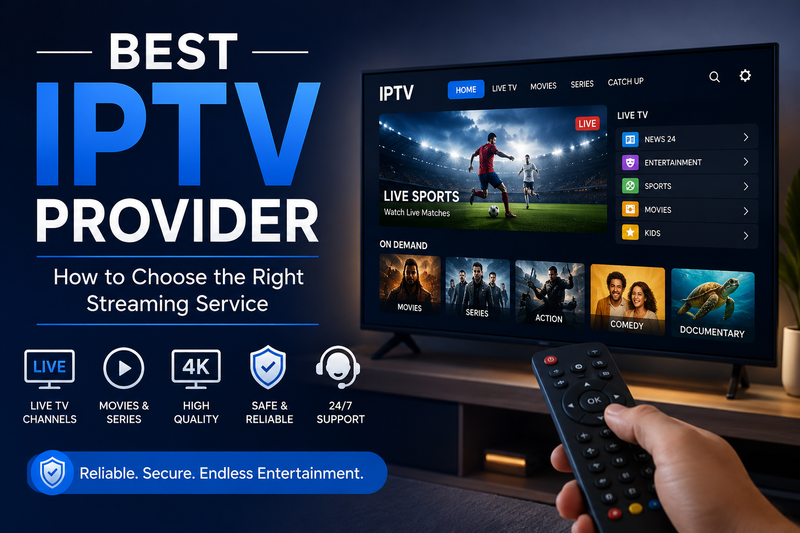
Find the best IPTV provider with our guide to legal streaming, channel selection, video quality, pricing, device support, security, and reliability.
Best IPTV Provider: How to Choose a Reliable and Legal Streaming Service
Finding the best IPTV provider can make a significant difference in how you watch live television, sports, movies, news, and entertainment online. IPTV, or Internet Protocol Television, delivers television content through an internet connection rather than relying exclusively on traditional cable or satellite infrastructure.
However, choosing an IPTV service requires more than simply looking at the number of channels available. Streaming quality, licensing, device compatibility, customer support, pricing, privacy, and reliability all play an important role. Most importantly, consumers should choose a provider that has the appropriate rights and licenses to distribute the content it offers.
This guide explains the key factors to consider when comparing IPTV services so you can make a well-informed decision.
What Is IPTV?
IPTV stands for Internet Protocol Television. It is a technology that allows television programming and other video content to be delivered through an internet connection.
Unlike traditional broadcast television, IPTV uses internet-based networks to deliver content to compatible devices. Depending on the service, users may be able to watch live television, on-demand movies, television shows, catch-up programming, or other digital content.
IPTV can be accessed through a range of devices, including smart TVs, streaming devices, computers, tablets, and smartphones. The exact features depend on the provider and the licensing agreements associated with its content.
What Makes the Best IPTV Provider?
The best IPTV provider is not necessarily the service offering the largest channel list. A better approach is to evaluate the overall quality, legality, reliability, and value of the service.
Here are some of the most important factors to consider.
1. Licensed and Legitimate Content
Legal content distribution should be the first consideration when selecting an IPTV service.
A legitimate provider should have the necessary rights or licenses to distribute the channels, programs, movies, and other content it advertises. Consumers should be cautious of services promising extremely large channel packages at unusually low prices without clearly explaining where the content comes from.
Choosing a licensed provider helps support content creators and broadcasters while reducing the risks associated with unauthorized services.
2. Streaming Quality
Video quality is another major consideration. A good IPTV service should provide a stable viewing experience that matches the available internet connection and supported device.
Depending on the provider and content, available resolutions may include standard definition, high definition, or 4K.
When comparing services, look for information about:
Supported video resolutions
Streaming stability
Buffering performance
Live TV quality
On-demand playback
Adaptive streaming technology
Remember that your own internet connection, Wi-Fi performance, device, and network congestion can also affect streaming quality.
3. Channel Selection
Channel availability is important, but quantity should not be the only deciding factor.
Instead of choosing a provider simply because it advertises thousands of channels, consider whether it offers the channels you actually want to watch.
For example, a viewer might prioritize:
Local television
National news
Sports
Entertainment
Movies
Children's programming
International channels
Regional programming
A smaller, well-organized selection of legitimate channels can provide more value than a massive list containing channels that are rarely watched or not properly licensed.
4. Device Compatibility
Before subscribing, check whether the service works with your preferred devices.
Depending on the provider, IPTV services may support smart televisions, streaming boxes, mobile devices, tablets, computers, or web browsers.
Device compatibility can vary, so check the provider's official documentation before purchasing a subscription.
You should also verify whether the service supports multiple devices and whether simultaneous streaming is permitted under the subscription terms.
5. User-Friendly Interface
A good streaming experience should be simple and intuitive.
Look for an IPTV platform that makes it easy to find channels, search for programs, browse schedules, and access on-demand content.
Useful features may include:
Electronic program guides
Search functionality
Favorites
Parental controls
Recently watched content
Personalized recommendations
Catch-up television
On-demand libraries
A clean interface can make a noticeable difference, especially for households with multiple users.
💎 Premium IPTV Service – Fast & Reliable 📺
Why Internet Speed Matters for IPTV
Your internet connection has a major effect on streaming performance.
Higher-quality video generally requires more bandwidth than lower-resolution streaming. A connection that works well for basic web browsing may not necessarily provide a smooth experience when multiple devices are streaming high-resolution video simultaneously.
For the best results, consider:
Using a reliable broadband connection.
Connecting your streaming device to a strong Wi-Fi network.
Using an Ethernet connection when practical.
Limiting unnecessary network activity during important live broadcasts.
Keeping your streaming device and applications updated.
If buffering occurs frequently, the provider may not always be responsible. Network congestion, weak Wi-Fi signals, outdated hardware, and internet service limitations can also contribute.
IPTV Pricing and Subscription Plans
Price is another important factor when comparing IPTV providers.
Rather than selecting the cheapest service available, compare the features included in each plan. A slightly more expensive legitimate service may provide better reliability, customer support, applications, content rights, and overall value.
When reviewing subscription plans, look at:
Monthly pricing
Annual pricing
Number of supported devices
Simultaneous streams
Available channels
On-demand content
Video quality
Customer support
Cancellation policies
Be particularly cautious with offers that seem unrealistic. Extremely low prices combined with an unusually large selection of premium content can be a reason to investigate the provider more carefully.
Customer Support Is Important
Reliable customer support can be especially valuable when dealing with streaming technology.
Before subscribing, check whether the provider offers clear support channels and useful documentation. Depending on the company, support may be available through email, live chat, help centers, or other official methods.
A professional provider should clearly explain:
How to install its application
Supported devices
Account management
Subscription terms
Troubleshooting procedures
Billing and cancellation policies
Avoid providers that make important subscription information difficult to find.
Security and Privacy
Internet-connected streaming services can involve personal information, payment details, and account credentials. Security should therefore be part of your IPTV provider comparison.
Look for providers that use secure websites, explain their privacy practices, and provide transparent information about how customer information is handled.
Consumers should also avoid downloading suspicious applications or installing software from unknown websites simply because a service promises access to additional channels.
Keep your devices updated and use strong, unique passwords for streaming accounts.
🔍 Explore More Streaming Guides
How to Compare IPTV Providers
Creating a simple comparison can make the selection process easier.
Start by identifying what you actually need from an IPTV service. For example, if you mainly watch news and entertainment, you may not need an expensive plan focused heavily on sports.
Next, compare providers based on several categories:
| Legitimacy | Does the provider have appropriate content rights? |
| Channels | Are your preferred channels available? |
| Quality | Does it support the resolution you want? |
| Devices | Does it work with your TV or streaming device? |
| Reliability | Is the service consistently available? |
| Pricing | Does the plan provide good value? |
| Support | Is professional customer assistance available? |
| Privacy | Is customer information handled responsibly? |
| Cancellation | Are subscription terms clearly explained? |
This approach makes it easier to identify a service that meets your actual requirements.
Red Flags to Watch For
Some IPTV offers may appear attractive because of huge channel lists and extremely low prices. However, consumers should investigate such services carefully.
Potential warning signs include:
No clear information about content licensing
Unrealistically large channel packages
Extremely low prices for premium programming
Unclear company information
Poorly explained billing terms
Suspicious applications or downloads
Requests for unnecessary personal information
No legitimate customer-support channels
Websites that make unrealistic guarantees
A professional provider should be transparent about its service, pricing, supported devices, and content.
Is IPTV Better Than Cable?
Whether IPTV is better than cable depends on individual preferences.
IPTV can provide flexibility because content is delivered through an internet connection and may be accessible across multiple compatible devices. Many modern streaming platforms also provide on-demand libraries and personalized features.
Traditional cable, meanwhile, may offer a familiar television experience and can sometimes bundle television, internet, and other services.
The best option depends on factors such as price, available programming, internet reliability, equipment, and personal viewing habits.
IPTV vs. Traditional Streaming Services
IPTV and conventional streaming services can overlap in functionality, but they are not necessarily identical.
Traditional streaming platforms often focus heavily on on-demand movies and television shows. IPTV services may place greater emphasis on live television channels and electronic program guides.
Some legitimate services combine live channels with on-demand programming, giving consumers a more traditional television experience through an internet connection.
When comparing platforms, focus on the programming you want rather than the technology name alone.
Questions to Ask Before Choosing an IPTV Provider
Before signing up, ask yourself several questions:
Does the provider legally distribute its content?
This should be your first consideration.
Does it offer the channels I actually watch?
A large channel count is less important than relevant programming.
Is my internet connection suitable?
Check your connection and network setup before expecting consistent high-resolution streaming.
Does it support my devices?
Confirm compatibility with your television, streaming device, computer, or mobile device.
Are subscription terms clear?
Review pricing, renewal conditions, cancellation policies, and supported features.
Does the provider offer customer support?
Reliable support can save considerable time if technical problems occur.
Tips for Getting the Most From Your IPTV Service
Once you choose a legitimate IPTV provider, a few simple steps can improve your overall experience.
Keep the streaming application updated and make sure your television or streaming device is running current software. Position your Wi-Fi router where it can provide a strong signal to your streaming devices.
For demanding live broadcasts, an Ethernet connection may provide a more consistent connection than Wi-Fi.
You should also regularly review your subscription. If you are paying for channels or features you never use, another plan may provide better value.
🚀 Find Your Perfect IPTV Plan →
Frequently Asked Questions
What does IPTV mean?
IPTV means Internet Protocol Television. It describes the delivery of television and video programming through internet-based networks.
How do I choose the best IPTV provider?
Compare legitimate providers based on licensing, channel selection, streaming quality, device compatibility, pricing, customer support, privacy, and subscription terms.
Is every IPTV service legal?
No. IPTV is a technology, and legality depends on how content is distributed. Consumers should select services that have appropriate rights to provide the programming they offer.
Do I need fast internet for IPTV?
A reliable broadband connection is important, particularly for high-resolution streaming. The required performance depends on video quality, the service, and how many devices are using the connection.
Can IPTV work on a smart TV?
Many legitimate IPTV and streaming platforms support smart TVs, although compatibility varies between providers and television models.
Is a bigger channel list always better?
No. The quality and relevance of the programming are more important than the total number of advertised channels.
Final Thoughts
Choosing the best IPTV provider requires more than comparing channel numbers or subscription prices. A reliable service should offer legitimate content, consistent streaming, suitable device compatibility, transparent pricing, useful features, and dependable customer support.
Before subscribing, take time to research the provider, understand its licensing and subscription terms, and confirm that it supports the devices and programming you need.
The right IPTV service should provide a convenient and enjoyable television experience without compromising transparency, security, or legitimate content distribution. By evaluating providers carefully rather than choosing solely on price or channel quantity, you can make a smarter long-term streaming decision.